


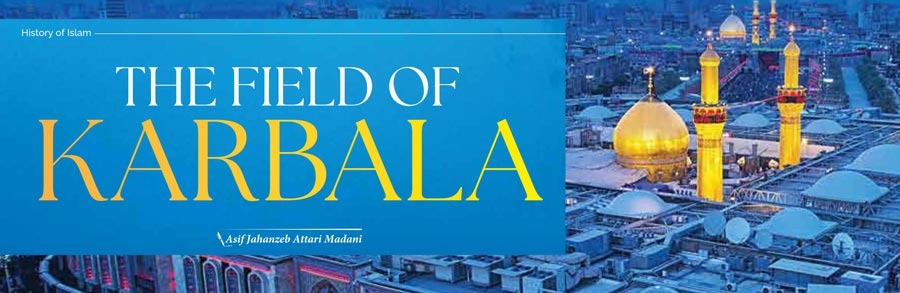
The Field of Karbala
On the 10th of Muḥarram 61 AH, a very painful event in the history of Islam took place. The noble family of the holy Prophet صَلَّى الـلّٰـهُ عَلَيْهِ وَاٰلِهٖ وَسَلَّم (Ahl al-Bayt) and their loyal companions were martyred by the army of Yazid while they were hungry and thirsty. The place where this historical event happened is named Karbala. It is located near the Euphrates River, about 80 kilometres from Najaf and 103 kilometres from Baghdad. It is also about 75 kilometres away from Kufa. Previously, it was a desert, but now it is a city in the country of Iraq.
Linguistic and Historical Status of Karbala:
The word Karbala is made of two words: "Karb" and "Balā".[1] Some experts of language say it comes from the word "Karbal" (sifted wheat) or "Karbalah" (marshy land) because the ground there is soft and free of pebbles. According to another opinion, "Karbal" is the name of a weed that used to grow there, which is why this place was named Karbala.[2] In the blessed aḥādīth, this place has also been mentioned by the names "Nīnawā" and "Ṭaff".[3]
Importance of Karbala in Islam:
This place holds special importance in Islamic history because the holy Prophet صَلَّى الـلّٰـهُ عَلَيْهِ وَاٰلِهٖ وَسَلَّم, through the knowledge of the unseen granted by Allah Almighty, gave news about the martyrdom of Sayyidunā Imam Ḥusayn رَضِىَ اللّٰهُ عَـنْهُ. It is narrated by the Mother of the Believers, Sayyidah Umm Salamah رَضِیَ اللّٰهُ عَنْهَا, that Angel Jibrīl عَـلَيْـهِ الـسَّـلاَم came to the holy Prophet صَلَّى الـلّٰـهُ عَلَيْهِ وَاٰلِهٖ وَسَلَّم and informed him that after him, his Ummah would martyr his grandson (Sayyiduna Imam Ḥusayn رَضِىَ اللّٰهُ عَـنْهُ) at a place called Karbala. Then, he presented the soil of the place of martyrdom to the beloved Prophet صَلَّى الـلّٰـهُ عَلَيْهِ وَاٰلِهٖ وَسَلَّم. The holy Prophet صَلَّى الـلّٰـهُ عَلَيْهِ وَاٰلِهٖ وَسَلَّم smelled it and said: “رِیْحُ کَرْبٍ وَ بَلَاءٍ”, "The smell of distress and calamity [comes from it]."[4]
Then the holy Prophet صَلَّى الـلّٰـهُ عَلَيْهِ وَاٰلِهٖ وَسَلَّم gave that soil to Sayyidah Umm Salamah رَضِیَ اللّٰهُ عَنْهَا and said: “When this soil turns into blood, know that Ḥusayn has been martyred.”[5]
Sayyidunā ꜤAlī Passing Through the Field of Karbala:
It is narrated that when the Leader of the Believers, Sayyidunā ꜤAlī b. Abī Ṭālib کَرَّمَ اللہ تعالٰی وجہَہُ الکریم, passed through Karbala, he رَضِىَ اللّٰهُ عَـنْهُ said: “This is where their rides will be stopped, this is where their belongings will be placed, and this is where their blood will be shed.”[6] When the enemies surrounded the noble Imam, he رَضِىَ اللّٰهُ عَـنْهُ asked: “What is the name of this place?” They replied: “Karbala.” He then said: “Indeed, the holy Prophet صَلَّى الـلّٰـهُ عَلَيْهِ وَاٰلِهٖ وَسَلَّم spoke the truth that this is the land of distress and calamity (Karb wa Balā).”[7]
Resting places of the Martyrs of Karbala:
After the event of Karbala, the people of the tribe of Ghāḍiriyyah performed the burial of the martyrs of Karbala رَضِیَ اللّٰهُ عَنْهُم.[8]
[1] Fayrūz al-Lughāt, p. 1060
[2] MuꜤjam al-Buldān, vol. 4, p. 125 derived
[3] Muṣannaf Ibn Abī Shaybah, vol. 21, p. 146, hadith: 38522; Al-MuꜤjam al-Kabīr, vol. 3, p. 106, Hadith: 3813
[4] Dalā'il al-Nubuwwah li-Abī NuꜤaym, p. 330, summarised; Tārīkh Ibn ꜤAsākir, vol. 14, p. 193
[5] Al-MuꜤjam al-Kabīr, vol. 3, p. 108, Hadith: 2817-2819, mafhūman
[6] Al-Ṣawā'iq al-Muḥriqah, p. 193, summarised
[7] Al-MuꜤjam al-Kabīr, vol. 3, p. 108, Hadith: 2812, summarised
[8] Al-Kāmil fī al-Tārīkh, vol. 3, p. 433

Comments